
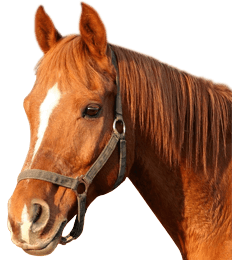
Horses & Man. A Peculiar Relationship

When you think about it, horses and humans coming together; playing and working together, is a peculiar match. It is one you don’t see anywhere else in the world!
What do I mean by this? Think about predators around the world; lions, bears, wolves, tigers, sharks etc. And now think prey animals; deer, sheep, zebra, wildebeast etc. The two just don’t mix! Predators are designed to hunt and kill prey animals while prey animals are designed to avoid these predators and so survive. Because of this you just don’t see the two species co-existing anywhere. Because of the unique qualities of a horse and our human drive to change and progress, the two of us have come together and have co-existed in a one-on-one relationship for thousands of years. For all the good things that have come out of this relationship, one thing can be guaranteed … there have always been problems and trouble in the relationship. That’s right, horses still would have been spooking at funny noises and sights when Julius Caeser was riding down the road, there would have been horses that bolted and bucked and I bet even if King Arthur of Camelot had a float he would have come across some horses that didn’t want to go on! Why is this so? Even after so many years with horses and so many experiences, why are humans still having so many issues? As I mentioned above no other predator and prey animal ever form relationships that don’t end with one eating the other. So, because a horse is a prey animal they are designed to avoid predatory behavior. Their flight instincts tell them to run away from danger. As humans, we are the world’s major predator, eating a variety of prey animals … and don’t horses know it! So it is our responsibility to prove to our horse that we are not going to hurt them. We need to show that we understand why they do the things they do. And we need to form a partnership with them based on trust and respect with the absence of force or intimidation. How do we do this? To put it simply we must learn the horse’s language and understand their psychology to form a willing relationship. In any relationship communication is key, without it one cannot understand the other. Let’s face it, we could all use help on our communication skills at times, even with the people closest to us. So to go about having a relationship with a horse we must learn their language and how to speak it. Don’t be mislead though, this is not a verbal language! You won’t go into a paddock and find a group of horses having a chat. Their language is silent and based on body language and gestures. Have a think about that now, most of us have seen a group of horses moving each other around, pinning ears, threatening to kick, licking and chewing, nodding their heads etc. These gestures are horses communicating with each other. It’s a pure language, and one we should all learn if we want to become good, effective leaders for our horse. As for a horse’s psychology, we must understand what motivates or drives them to want to do something. If we think about ourselves, we will do just about anything for money, or maybe the reward of a treat such as an ice cream may be enough to cause us to want to do something. Simpler than this, we may just want a bit of praise for doing the right thing, a pat on the back, a ‘Well one Son’ etc. We can even carry this through to our dogs and think how they respond to food as a treat and how a pat on the head is sometimes all the praise they need for doing the right thing. We are similar because we are both predators and are therefore motivated by the same kind of things. Taking food as an example, predators have to work for it, they need to hunt and earn their food, it is therefore of great value and so predators see it as a reward. Prey animals, however, are quite different. They live on the fields with grass all around them. Their food does not try to escape or run away from them, so food is not a reward, and neither is anything type of physical object. However, as they are food for other animals, keeping safe is at the top of their list for things that motivate them. They want to find safety in any situation, let’s take the float for example, to a horse it looks like a trap on wheels, a place where once they are cornered into they cannot escape. So in this case it is vital we let our horse know that the float is actually safe and that they won’t be trapped inside forever. Once they do feel safe with a situation horses then want to get comfortable. When you see horses in a paddock that they feel safe in most of the time they are just standing still, grazing away. Horses don’t like to be uncomfortable and will always follow the path of least resistance. So taking us back to our float example we need to make the inside of the float a desirable, comfortable place to be, and make outside, not wanting to go on, an undesirable, uncomfortable place. With the horse’s safety and comfort taken care of, typically horses will then feel free to interact, they will have fun and play with each other. For this reason we should make sure all our interaction with horses is as much fun for them as it is for us! You can clearly see that as horses and humans we are so different in so many ways, this causes so many of the issues and problems that exist. Misunderstandings are a regular occurrence. So to minimise these issues we need to take on the responsibility to learn about our horse, learn their language, learn their psychology and develop a willing relationship. You will be amazed at what you can achieve by learning and applying these techniques … and your horse will thank you for it!